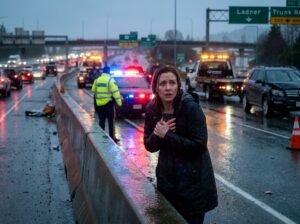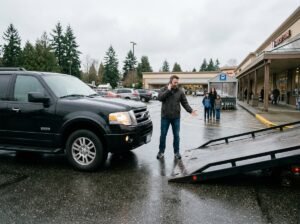
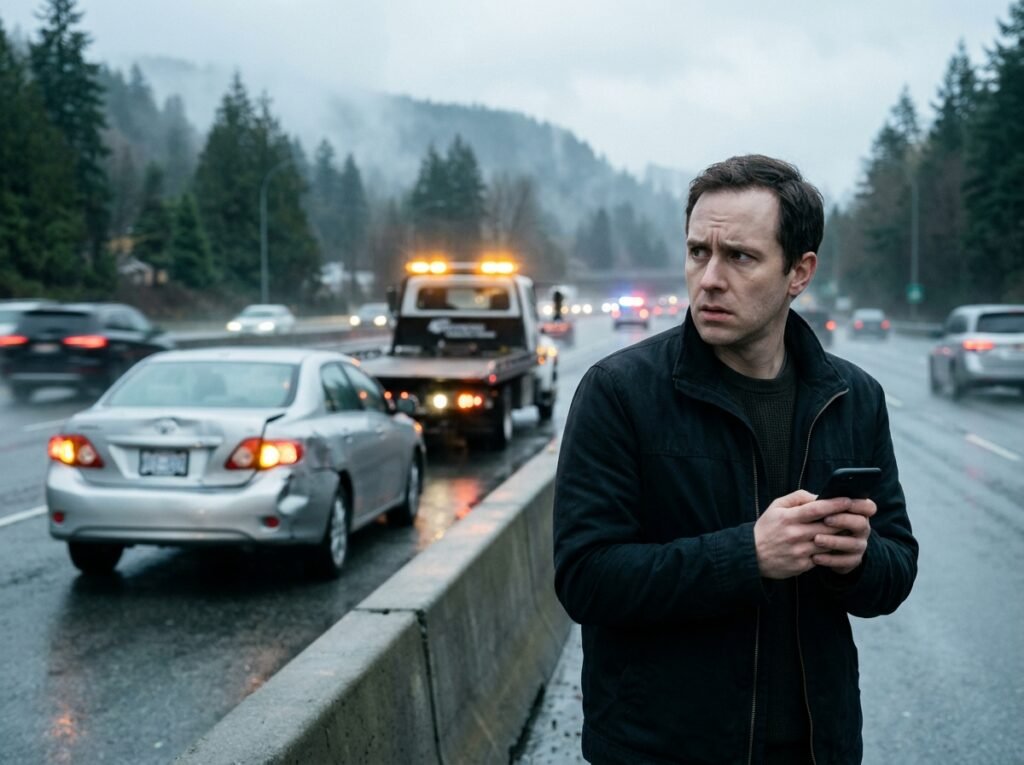
A truck is here. That does not mean you must agree right away.
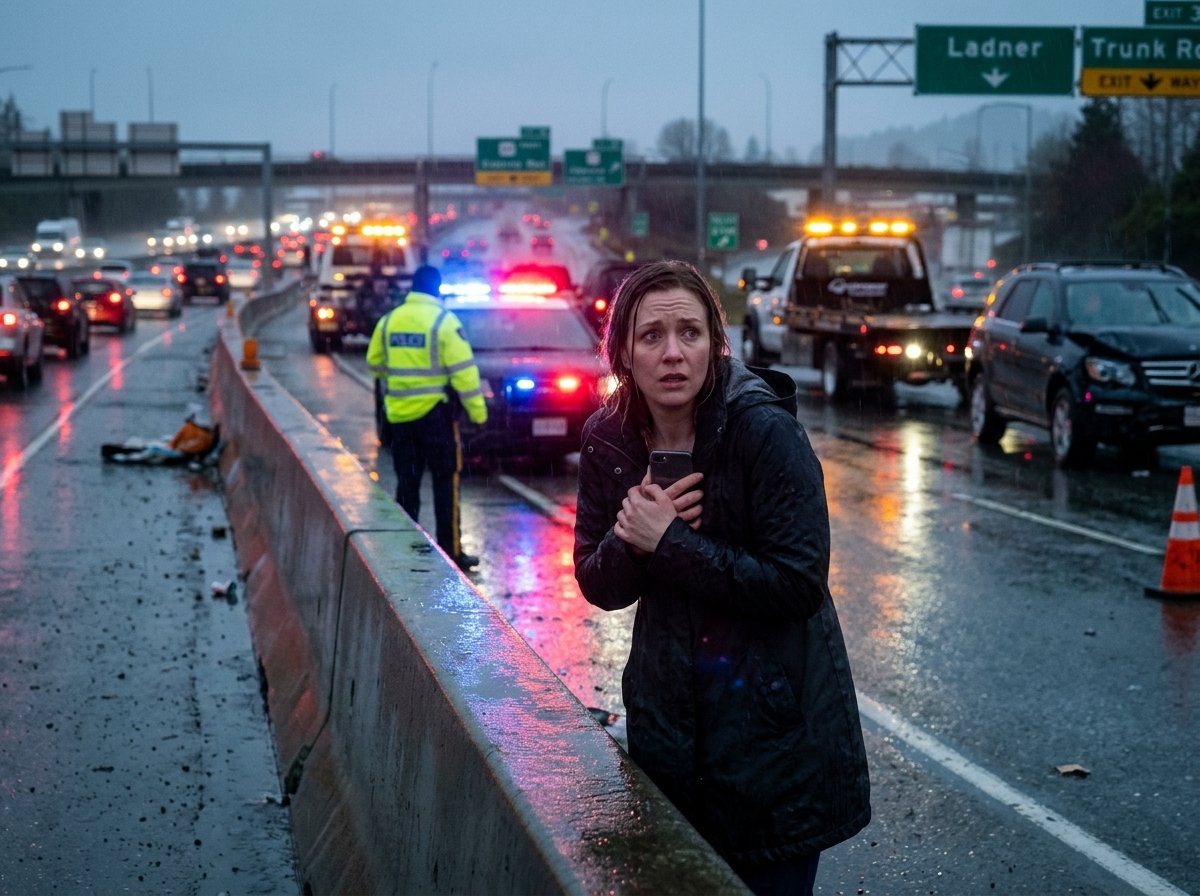
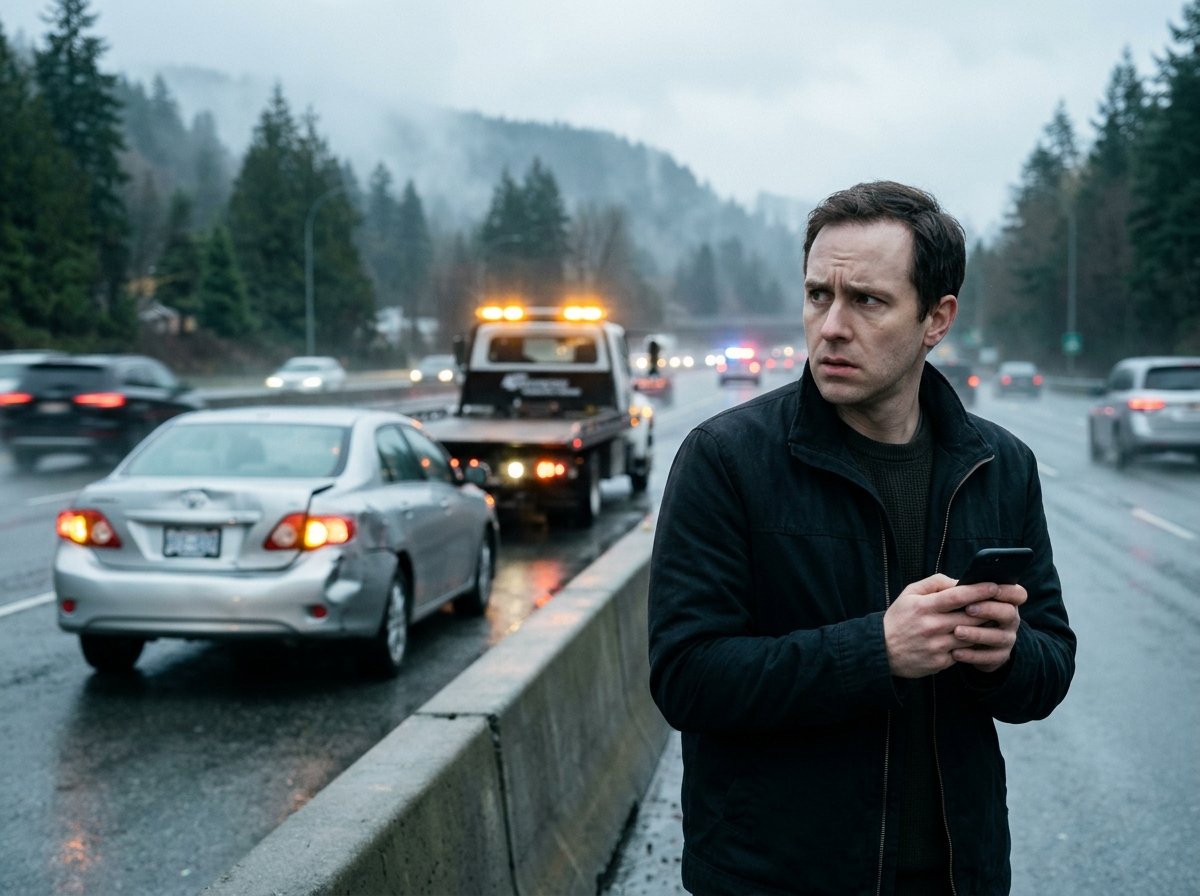
After a crash on Highway 1 near Coquitlam, a tow truck may arrive before you have time to think. First get to a safe place and follow emergency workers. Then check who sent the truck, where it will take your car, and what you may pay. Ask if flatbed towing in Coquitlam is needed for damage to the wheels or frame. For a tow quote, call (236) 245-9047.
Quick overview
- A truck arrives but you did not call for it.
- You are asked to sign a form before you see the destination.
- A fee is named but storage and recovery are not explained.
- Your car may not be safe to drive after the crash.
In this guide
- A clear company name and dispatch check can help prevent mix-ups.
- A written destination and price breakdown give you a record.
Simple version: check three things before you agree.
- Who sent this tow truck?
- Where will my car go?
- What is the full price and who may pay?
- Keep photos and a copy of the tow form.
Highway 1 Crash Tow: The Short Answer
- Check 1: Match the driver and truck to your call or the police order.
- Check 2: Confirm the exact drop-off place and safe tow method.
- Check 3: Ask for all towing and storage fees in writing.
Check 1: Who Sent the Tow Truck?
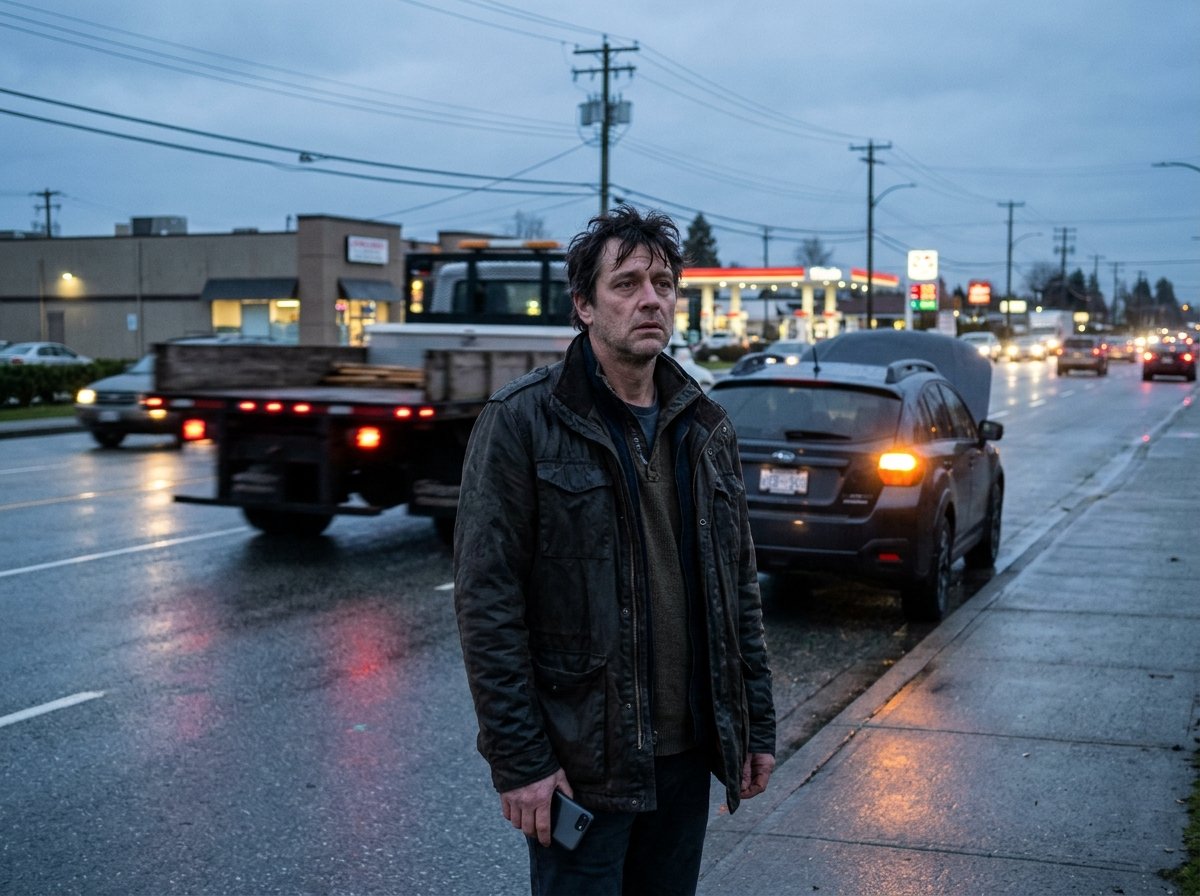
A truck at the scene may be one you called, one sent by a roadside plan, or one requested by police. Ask the driver for the company name and what call they were sent to. If you booked light-duty towing, call your dispatcher to confirm the arriving truck. If police have ordered an urgent tow, follow their instructions and ask where the car will be taken.
Context (what matters in this situation):
- Ask for the driver name and towing company.
- Match the truck to the dispatch details you received.
- Ask police if they requested a truck for your vehicle.
- Do not delay a police-ordered road clearance to shop for prices.
Check 2: Where Will Your Damaged Car Go?
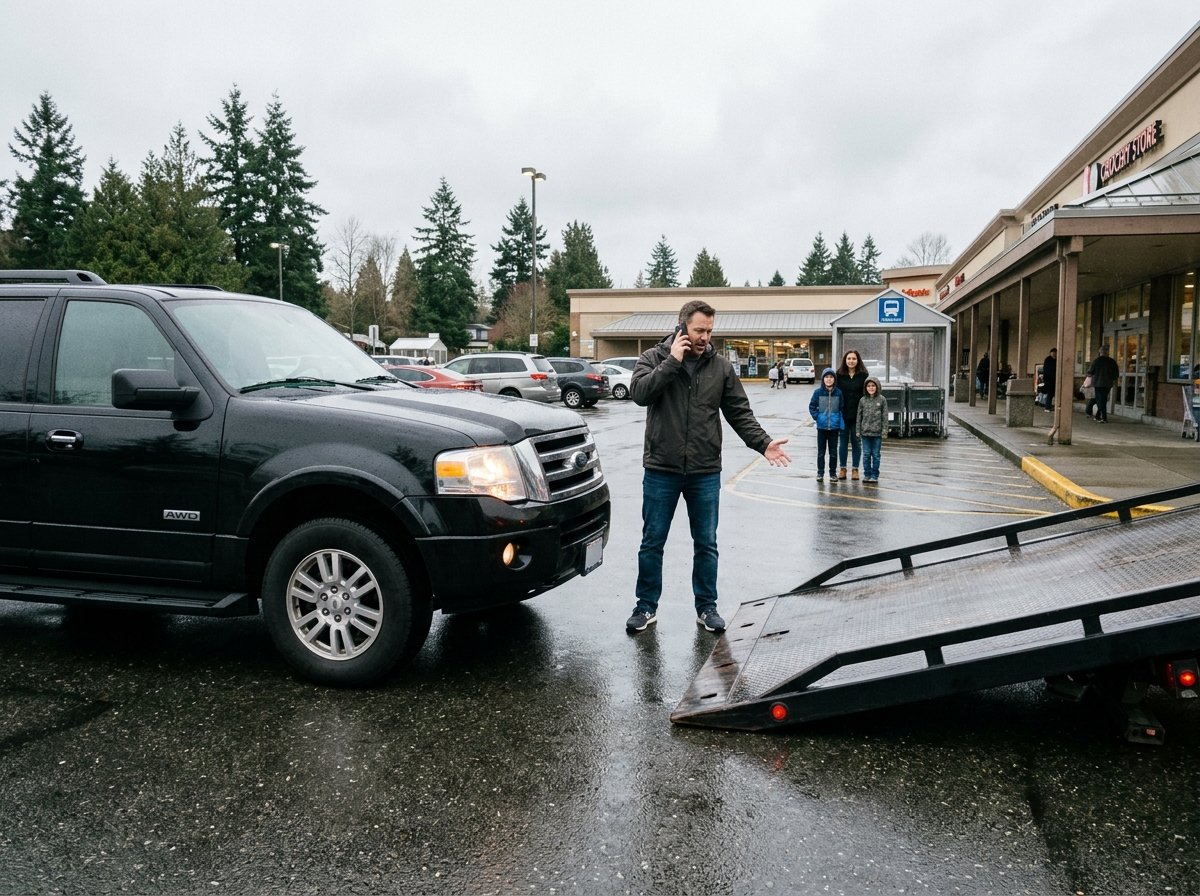
The drop-off place matters. Some vehicles go to a secure tow yard first. Others may go to a repair shop if that is safe and allowed. For a badly damaged larger vehicle, ask whether heavy-duty towing and recovery gear are needed. Get the full street address before the truck leaves when it is safe to do so.
What this usually looks like (real-world flow):
- You move away from live lanes and check on everyone involved.
- A tow truck stops and the driver explains why it is there.
- You ask for the exact tow yard or repair shop address.
- You confirm how a damaged car will be loaded.
- You take a photo of the truck and keep the paperwork.
Details to confirm (so you get the right help fast):
- Record the lot name, address, phone number, and hours.
- Tell the driver if a wheel, axle, or steering part is bent.
- Ask how you will get your keys and belongings back.
What you should get as the outcome:
- You know where to find the vehicle after the crash.
- The driver can plan the right loading method.
- You have a clear record for your insurance claim.
Book for a Tow Truck in Under 60 seconds.
Tap to call now, or request a quote and we’ll confirm the right truck for your situation.
Or call (236) 245-1552 • 24/7 Dispatch
Check 3: What Is the Full Tow Cost?
Ask for the call-out fee, tow fee, possible recovery work, mileage, and storage. A roadside plan or insurance policy may help, but do not assume every charge is covered. Use this Coquitlam tow fee checklist to ask clear questions before you sign. Get a written receipt and save it for ICBC.
Limits / constraints (what can slow things down):
- Roadside plans may limit tow distance or service calls.
- Crash recovery may be outside a basic roadside plan.
- An insurer may need to check your claim and coverage first.
- Police-ordered towing may limit your choice at the scene.
Hidden costs to watch for:
- Recovery or winching if the car is off the road.
- Extra time or special loading for severe damage.
- Daily storage charges at a tow yard.
- A second tow from the yard to a repair shop.
What to Do Before the Truck Leaves
When the scene is safe, ask the driver to repeat the destination and total known charges. If the car must go far beyond Coquitlam, check how long-distance hauling is priced. Keep your copy of the tow form. If police direct the tow, ask for the yard details and get clear of traffic.
- Photograph the damage, the plate, and the tow form if safe.
- Keep keys, valuables, and claim details together.
Our Recommendations Before You Accept a Highway Tow
Put safety and police directions first.
Confirm the truck was sent for your car.
Know the exact tow yard or shop address.
Ask for each fee and the payment method.
Save the receipt and any photo of the tow form.
Report your crash to ICBC and check coverage.
Five Safety Steps After a Highway 1 Crash
Do not stand in traffic to check a bumper or tire. If you suspect battery, wheel, or frame damage, tell dispatch before loading. For an electric car, ask whether Tesla towing procedures or a flatbed are needed. Safety comes before any price talk.
Do this in order:
- Call 911 for injuries, fire, blocked lanes, or immediate danger.
- If safe and possible, move to a protected spot away from traffic.
- Follow instructions from police, fire, and road crews.
- Do not try to drive a car with unsafe steering, brakes, or loose parts.
- Only take photos and collect items when it is safe.
Scenario 1: Your Pickup Is Blocking a Highway Lane
A crash leaves a pickup across a lane near the Brunette Avenue interchange. Police may need it cleared right away. Tell dispatch if the truck is heavy or cannot roll; truck towing may need different equipment than a small car tow. Confirm the yard once emergency crews say it is safe.
What to do:
- Tell emergency crews about leaks or trapped people.
- Share the truck size and visible damage.
- Get the destination and receipt after the urgent move.
Scenario 2: Your RV Is Damaged Near an Exit
An RV is too large for a standard car truck and may have loose parts after a crash. Ask about RV towing before you approve the move. Give the length, weight if known, and whether a trailer is attached. The correct equipment and yard space matter.
What to do:
- Give the RV size and whether it can roll.
- Tell dispatch about any trailer or hitch damage.
- Check size-based fees and the drop-off site.
Scenario 3: A Motorcycle Has Fallen After a Collision
A damaged motorcycle may need a wheel chock and secure straps. Ask the driver how the bike will be held in place. If you need motorcycle towing, tell dispatch about bent wheels, fuel leaks, or broken handlebars. Do not ride it away to save a towing fee.
What to do:
- Check for leaks without touching damaged parts.
- Request safe loading and secure straps.
- Note the destination and photograph the bike.
Step-by-step: what to do next
Step 1: Confirm Dispatch
Call (236) 245-9047 or request a quote once everyone is safe. Give the Highway 1 direction, closest exit, vehicle type, and damage. Ask who will respond and read these Coquitlam tow truck ETA questions before relying on an arrival time. Follow any police order first.
Step 2: Share a Safe Pickup Spot
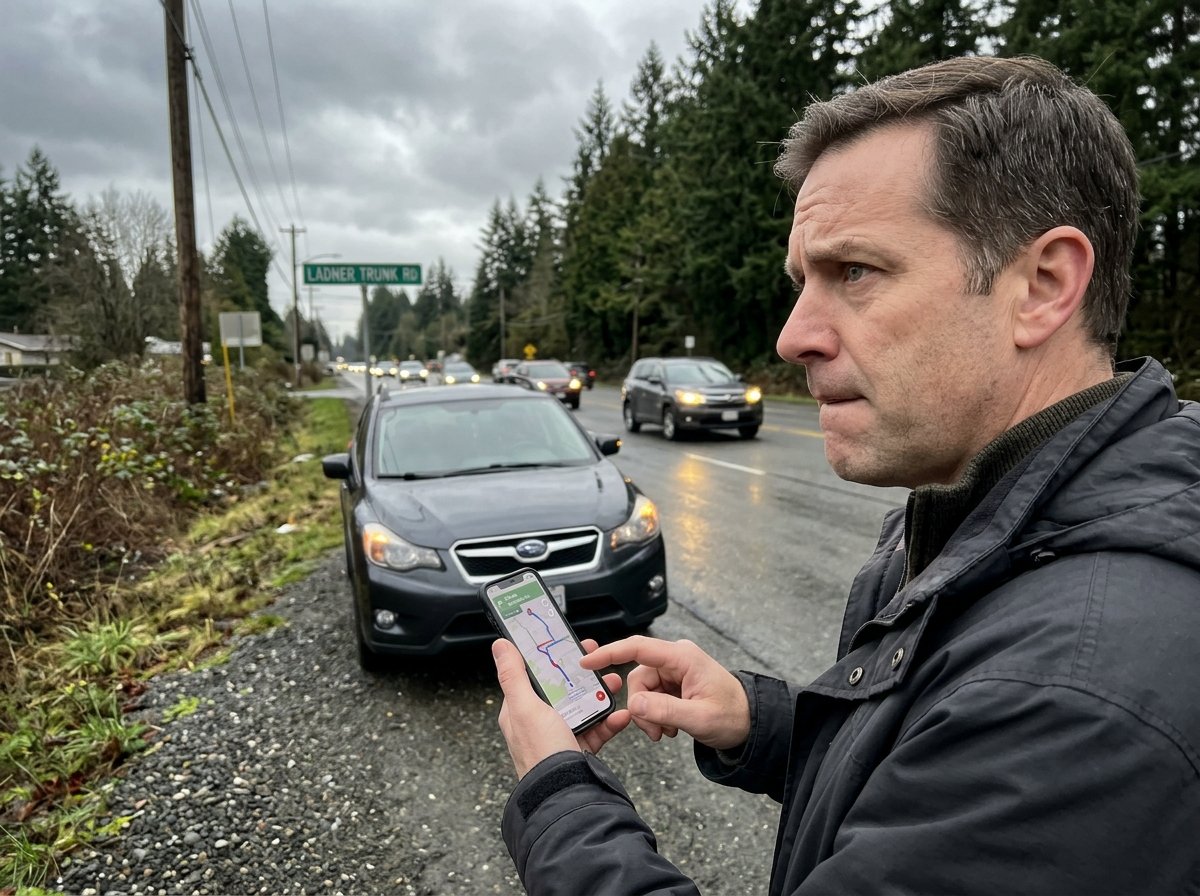
Share the closest highway exit, direction of travel, and a map pin if you can do so safely. Do not walk along Highway 1 to find an address. If emergency crews move the car first, share the new storage-yard location instead.
Step 3: Match the Tow Method to the Damage
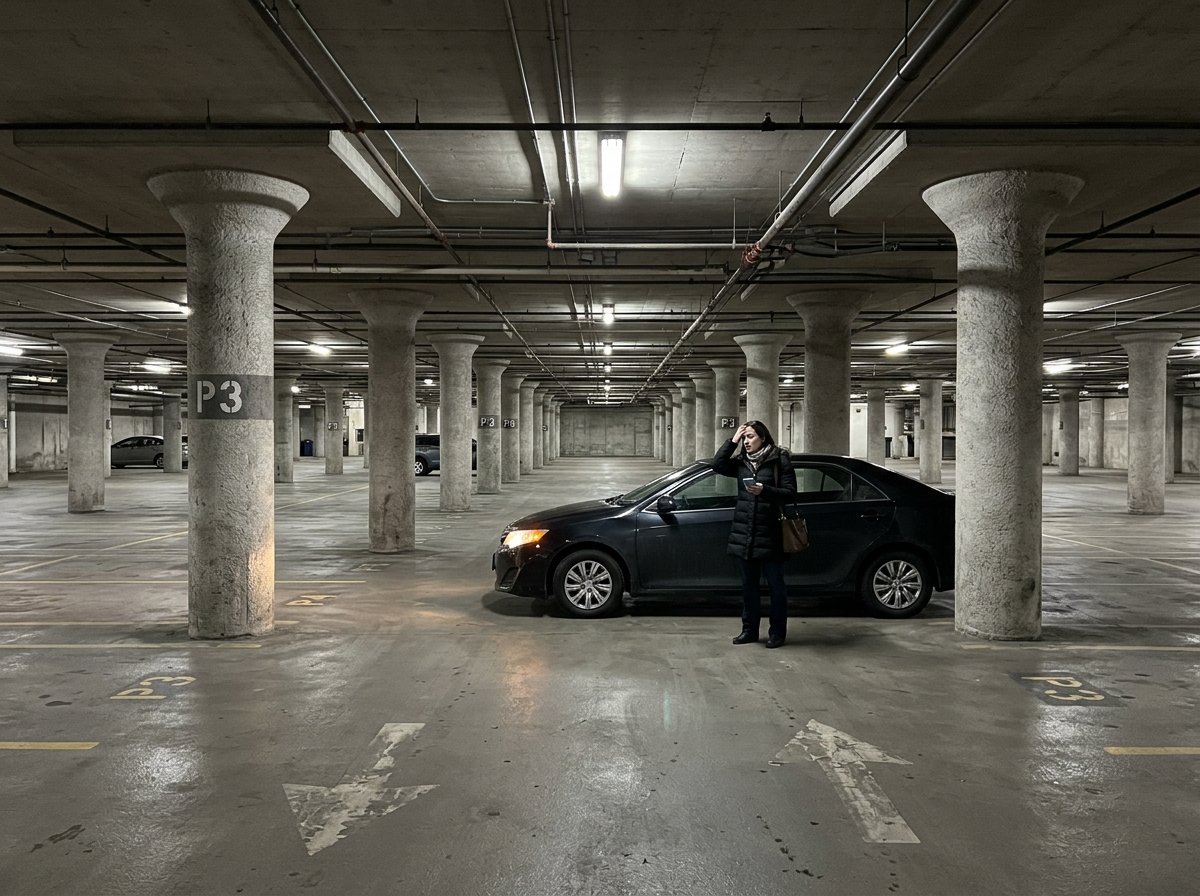
Tell dispatch if the car cannot roll, the front wheels are locked, or you are stuck in a low-clearance spot. Different vehicles may need different loading gear. For a later move from a parkade, ask about underground towing rather than sending a tall truck.
Get Low Rates On Your Next Roadside Service.
Tap to call now, or request a quote and we’ll confirm the right truck for your situation.
Or call (236) 245-1552 • 24/7 Dispatch
ICBC guide to towed vehicles and storage fees
ICBC explains what can happen after a crash when emergency crews arrange a tow to a storage yard. Its guide to damage estimates and towed vehicles also explains daily storage fees and how direct billing may work. Check whether the towing company is in the ICBC Towing Program before assuming ICBC will pay it directly. Keep your receipts because payment depends on your claim and coverage.
Highway 1 Tow Truck FAQs
Can I refuse a tow truck that I did not call?
If you arranged your own tow, check that the driver matches your booking before you agree. If police have ordered a tow to clear a hazard, you may not be able to choose another truck at the scene. Ask for the destination and paperwork when safe.
What if I was towing a trailer when I crashed?
Tell dispatch about the trailer before the truck arrives. The hitch, load, and axles may need separate care, so ask about trailer towing and any extra fee. Keep the trailer destination on the receipt too.
Will ICBC cover my tow and storage bill?
It depends on your coverage, who is responsible for the crash, and what costs are eligible. Ask ICBC about the tow, daily storage, and any second move. Keep every receipt and do not assume the driver can approve coverage.
What if my car was moved into a parkade after the crash?
Give the exact height limit, stall level, and exit route to dispatch. These underground towing details can help you share what a driver needs before entering. A normal-height truck may not fit.
Should a damaged all-wheel-drive car be towed on a dolly?
The safest method depends on the vehicle manual and what was damaged. Ask whether a flatbed is better than dolly towing for your car. Tell the driver if a wheel cannot turn or roll.
What if the tow price changes after loading?
Ask which added work caused the new fee and request a written breakdown. Do not argue beside live highway traffic. Save the quote, receipt, and company contact details so you can review the charge later.
Need a quote before booking?
At Towstar, we’re a locally operated towing company with over 10+ years of experience serving Burnaby and the Lower Mainland. Drivers rely on us for emergency towing and roadside assistance because we show up, communicate clearly, and don’t surprise you with hidden fees.
Get a quote before booking and see why so many local drivers leave us 5-star reviews.
Get Directions to Autostar Towing and Recovery
Open Google Maps to see the best route, ETA, and turn-by-turn directions to our location.